

Why stadium event growth depends on surface integrity
20/07/26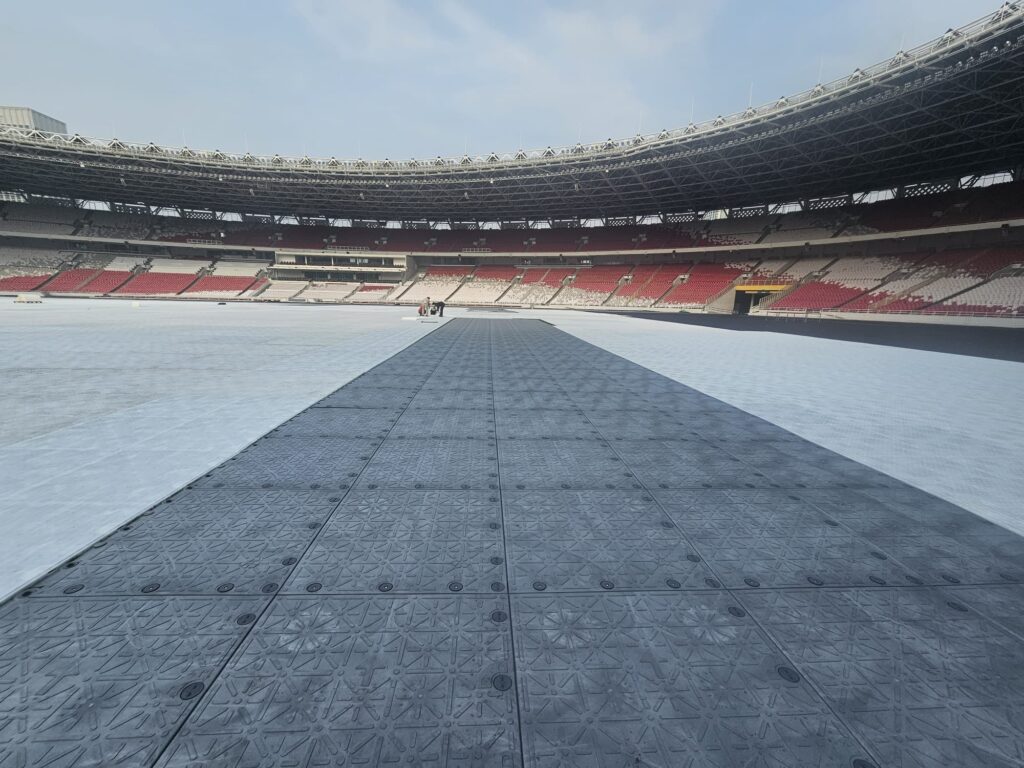
Stadiums are no longer single-purpose venues. They now host a wide range of entertainment experiences, from concerts to large corporate events throughout the year. In this environment, the ability to maintain reliable surface performance and reinstatement outcomes across the event cycle has become critical.
This shift has created significant opportunities to increase utilisation and generate more revenue. Major touring artists require large venues, promoters seek iconic locations, and stadiums are increasingly expected to serve purposes beyond their original design.
However, many venues are unable to commit to additional events because they cannot guarantee consistent surface performance and reinstatement within required timeframes. Each event can introduce incremental stress or wear, creating a chain of costly consequences such as high repair costs, cancelled sporting fixtures, and reputational risk.
Different venues manage a range of surface types, from natural grass and hybrid pitches to fully synthetic fields. While operational challenges vary, the underlying requirement remains the same: maintaining surface performance. Consequently, surface protection is now considered a critical part of venue infrastructure, supporting both the playing surface and predictable reinstatement after events.
Table of contents
- Why demand isn’t the limitation
- What recovery integrity means
- How events place pressure on stadium surfaces
- The role of turf protection for events
- Why stadium flooring systems are important
- Surface protection as venue infrastructure
- FAQs
Why demand isn’t the limitation
Over the past decade, the global live events industry experienced significant growth. Concert production is larger and more technically complex, and audiences expect immersive live experiences.
This has created strong demand from promoters and event organisers seeking suitable venues, and scheduling decisions are rarely made solely by commercial teams.
Grounds teams, operations leaders and asset managers must also consider the condition of the playing surface. A damaged pitch can lead to cancelled fixtures, reputational damage, and expensive restoration work.
Because of this, stadium calendars are often shaped by one key question:
Will the pitch recover in time for the next match or event?
If the answer is uncertain, additional bookings may be declined, even when commercial demand exists.
What recovery integrity means
Surface integrity refers to the speed, predictability, and reliability with which a playing surface can return to its required condition following major events. This may involve natural grass recovery, hybrid pitch restoration, or the reinstatement of synthetic field systems after heavy load or extended use.
Recovery integrity considers whether a pitch can return to its intended condition after this stress, which includes key factors such as:
- Rootzone condition
- Soil compaction levels
- Airflow to the turf
- Moisture balance
- Surface consistency for play
If these elements are compromised, the pitch may require extensive repair work.
How events place pressure on stadium surfaces
Large events introduce heavy loads that the playing surface would not normally experience during sport, including staging structures, lighting towers, production vehicles, and concentrated foot traffic. These forces compress the turf and underlying soil structure.
Without proper protection, this can cause:
- Soil compaction
- Reduced airflow to the turf
- Damage to the grass roots
- Uneven playing surfaces
Visible damage may appear minimal, but deeper structural issues remain beneath the turf. These hidden problems are often what extend recovery timelines.
The role of turf protection for events
Turf protection systems are a key part of event infrastructure, designed to create a stable, load-bearing surface above the playing field. By distributing weight evenly, they reduce stress on the playing surface and protect the underlying field structure from excessive compaction and damage.
Interlocking panels provide a continuous surface capable of supporting heavy equipment, staging, and large crowds. This helps maintain the condition of the playing surface during events and supports more predictable reinstatement once the system is removed.
For natural grass and hybrid systems, airflow beneath the panels can help reduce turf stress during shorter, multi-day events. In longer event scenarios, the primary benefit becomes protection of the underlying rootzone, drainage layers, and sub-base, ensuring the field can be successfully restored after the event period.
High-quality protection systems support both short-term surface performance and long-term structural preservation, depending on the duration and intensity of use.
Why stadium flooring systems are important
Terraplas stadium flooring tiles are designed in different load classes to manage the range of stresses that occur during an event.
Pedestrian tiles create safe walking surfaces for spectators and light foot traffic, helping to reduce direct impact on the playing surface. Heavy-duty tiles are designed for higher load requirements, including production equipment, staging, vehicles, and stage structures. These tile types can be combined to create a bespoke flooring system tailored to the operational requirements of each event.
Both play a role in modern stadium operations. The key is to configure a purpose-built system that matches the operational requirements of the event while providing the appropriate level of protection for the underlying surface infrastructure.
Purpose-built systems are engineered to:
- Distribute loads across the surface
- Protect rootzones, shock pads, or sub-base layers
- Support heavy equipment and production vehicles
- Maintain predictable post-event reinstatement conditions
As a result, surface performance and reinstatement outcomes become more predictable, enabling stadium events to be planned and delivered with greater confidence.
Surface protection as venue infrastructure
Surface protection is no longer viewed as a temporary event accessory, but as part of core venue infrastructure, given its direct influence on the overall event schedule.
In many modern stadiums, the approach to surface management depends on the duration and intensity of event use. For short-term or occasional events, the priority is to preserve the playing surface and support faster, more reliable recovery for sporting use. In contrast, during extended summer event seasons, it may not be practical to maintain grass cover throughout, and the focus shifts toward protecting the underlying pitch structure so the surface can be successfully reinstated afterwards.
Across both scenarios, surface protection becomes essential infrastructure. When surface condition and reinstatement outcomes are predictable, commercial teams can approve additional events with greater confidence.
By preserving surface integrity and supporting predictable reinstatement outcomes, Terraplas turf protection systems enable greater venue utilisation, allowing stadiums to host more concerts and major events without compromising their primary sporting function.
FAQs
What is stadium surface protection?
Stadium surface protection refers to specialised flooring systems used to protect natural grass or hybrid pitches during concerts, exhibitions, and other large events.
Why is turf protection important during stadium events?
Heavy equipment, staging and large crowds can compress the soil and damage the grass. Turf protection distributes loads and helps preserve the health of the playing surface.
How do stadium flooring systems help surface recovery?
Engineered flooring systems spread weight evenly and allow airflow beneath the panels, helping prevent rootzone damage and supporting more predictable reinstatement after events.
Can stadiums host multiple concerts on the pitch?
Yes, but only if the playing surface can be restored or returned to the required condition reliably between events. Proper surface protection is essential for maintaining surface performance and enabling predictable reinstatement when hosting multiple events.
What role does surface protection play in venue infrastructure?
Surface protection has become part of modern venue infrastructure because it allows stadiums to host large events while maintaining the quality of the playing surface for sport.
Do synthetic pitches require surface protection during events?
Yes. While synthetic surfaces do not require turf recovery, they still require protection from heavy loads and equipment to prevent damage to the shock pad, infill layers, and base construction, and to maintain long-term surface performance.
MORE OF OUR LATEST NEWS

At first glance, a surface protection system might seem to have done its job: th...
Whether approving new events, expanding concert programmes, or increasing non-ma...
A successful concert, exhibition or sporting fixture is remembered for the atmos...